
Driveways Built for Load and Weather
Concrete Driveways in Mount Vernon for daily vehicle use and heavy loads without cracking or settling
Smucker Quality Homes, Inc installs concrete driveways for residential properties in Mount Vernon, Prairie City, Dayville, and surrounding areas. You get a driveway designed for proper drainage, consistent thickness, and long-term performance under the weight of vehicles, trailers, and equipment. Each installation is planned around the specific site conditions, including slope, soil type, and connection points to the street or garage, with finishes that provide traction and resist surface wear from tires and weather exposure.
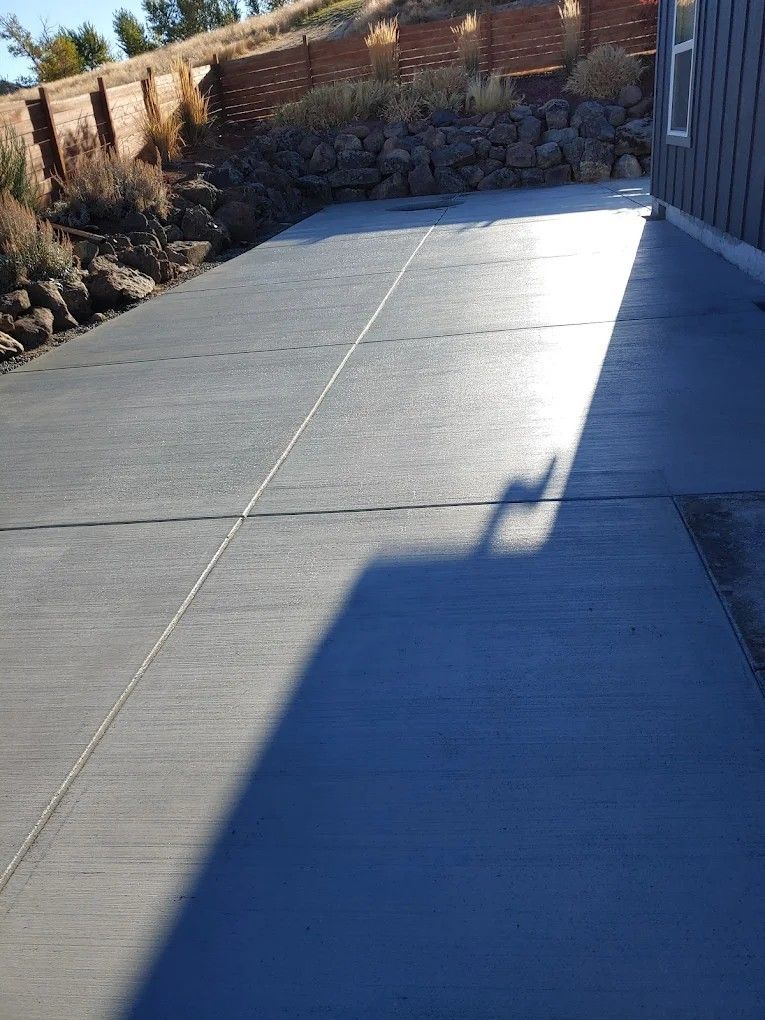
The process begins with excavation and removal of existing material, followed by grading to establish the slope and ensure water runs off the surface and away from the house. A compacted gravel base is installed to provide stable support and prevent the slab from shifting. Forms are set to the width and length of the driveway, and rebar or wire mesh is placed to reinforce the concrete. The pour is completed in sections if the driveway is long, with control joints placed to manage cracking. The surface is finished with a broom texture to add grip, and edges are tooled for a clean appearance.
If you need a new driveway or a replacement for a failing surface in Mount Vernon or a neighboring community, contact Smucker Quality Homes, Inc to schedule a free estimate and review layout and sizing options.
Why Concrete Driveways Hold Up
Your driveway is poured at five to six inches thick to handle the weight of passenger vehicles, trucks, and occasional heavy equipment. The base is compacted to eliminate soft spots that could cause the slab to settle unevenly. Reinforcement is placed in the center of the pour to resist flexing and temperature-related cracking. Control joints are cut or formed every ten feet to direct shrinkage cracks into planned locations, and expansion joints are placed where the driveway meets the garage slab or existing concrete.
After installation, you notice a smooth, level surface that slopes gently toward the street or drainage area, with no low spots where water collects. Smucker Quality Homes, Inc ensures the driveway is tied into the street apron or approach in a way that avoids abrupt transitions or trip hazards. The broom finish provides traction in wet conditions, and the edges are formed to match the surrounding landscaping. What you end up with is a driveway that handles daily use, resists cracking for years, and requires minimal maintenance beyond occasional cleaning and sealing.
The work includes grading adjustments to account for existing drainage patterns and coordination with any utility lines or irrigation systems in the area. Custom sizing is available for wider driveways, RV parking, or turnaround areas. Curing time is monitored based on temperature, and the surface is protected from heavy loads for at least seven days to allow the concrete to reach full strength.
Driveway Installation Questions
Homeowners in Mount Vernon and surrounding areas often ask about thickness, reinforcement, and timing. These answers cover the practical details of concrete driveway installation.
How thick should a concrete driveway be?
Residential driveways are typically five to six inches thick to support passenger vehicles and light trucks without cracking or settling under load.
Why is reinforcement used in driveways?
Reinforcement, such as rebar or wire mesh, prevents the concrete from cracking due to flexing, temperature changes, or soil movement beneath the slab.
What is the purpose of control joints?
Control joints are cut into the surface to create weak points where the concrete will crack in a straight line as it shrinks, rather than forming random cracks across the driveway.
How long before I can park on a new driveway?
You should wait at least seven days before parking vehicles on the driveway to allow the concrete to cure and reach sufficient strength to handle the load without surface damage.
What drainage slope is required for a driveway in Mount Vernon?
Driveways are sloped at one-eighth to one-quarter inch per foot to move rainwater and snowmelt off the surface and prevent pooling near the garage or foundation.
Smucker Quality Homes, Inc installs concrete driveways throughout Mount Vernon with a focus on durability and site-specific planning. Call to discuss your project, review options for width and finish, and get a detailed estimate based on your property layout.