Open Bays and Fast Construction for Storage Needs
Pole Barns in Mount Vernon for rural properties needing cost-effective storage for equipment, hay, and multipurpose use
Smucker Quality Homes builds pole barns that provide large, open interior space for storing farm equipment, vehicles, hay, or materials without the cost and complexity of a traditional foundation in Mount Vernon, Prairie City, Canyon City, and surrounding areas. You need a pole barn when you require covered storage that goes up quickly, costs less per square foot than stick-framed buildings, and offers flexible interior layouts without load-bearing walls. These structures are not temporary—they are anchored with treated posts set in concrete and framed to handle snow loads, wind, and years of use.
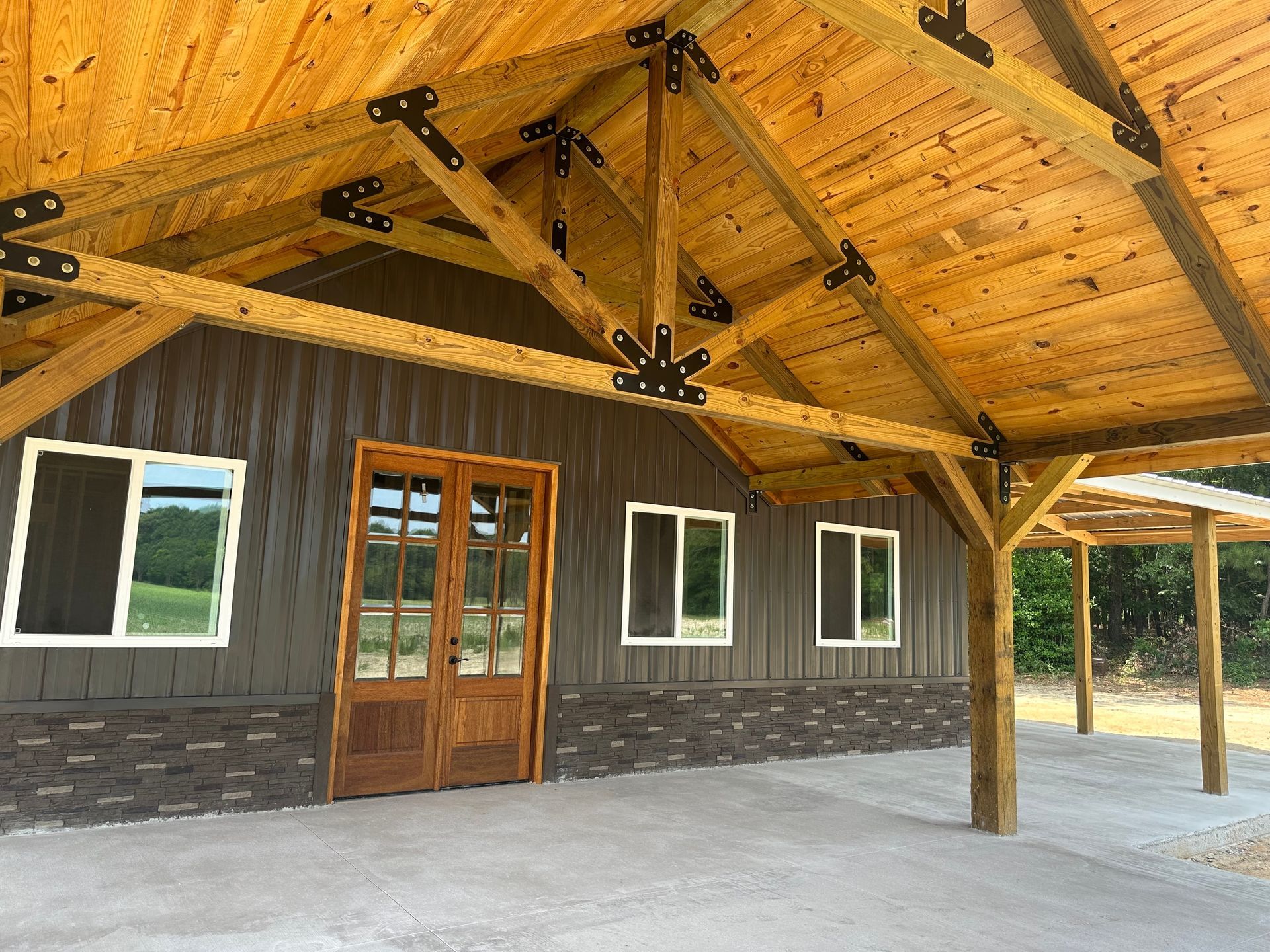
The design is based on what you plan to store and how you need to access it. Posts are spaced to allow wide door openings for tractors, trucks, or trailers. Roof pitch and truss design are selected to shed snow and rain without sagging. Siding and roofing materials are chosen for durability and low maintenance. Because there is no slab foundation, the ground inside can remain gravel, dirt, or be poured later if you want a concrete floor for specific work areas.
If you need storage space that does not require excavation, lengthy permitting, or high upfront costs, a pole barn delivers functional shelter that adapts to changing needs over time.
How Pole Barns Are Built and What They Handle
Your site is cleared and leveled, and post locations are marked based on the building dimensions and truss layout. Holes are augered to the required depth, and treated posts are set in concrete to anchor the structure. Horizontal girts are bolted to the posts to support siding and provide lateral bracing. Roof trusses are installed and sheathed, then covered with metal roofing or shingles depending on your preference. Overhead doors, service doors, and windows are framed into the openings.
What you notice when the barn is finished is an open interior with clear spans and no columns blocking the center. Equipment moves in and out easily. The roof keeps rain and snow out. Smucker Quality Homes sizes the posts and trusses to meet snow load and wind requirements, so the building holds up through heavy weather without shifting or leaning. Metal siding resists rot and pests. The structure can be sided fully or left open on one or more sides depending on how you use the space.
Pole barns work well on uneven ground because posts can be trimmed to level the building without extensive grading. However, drainage must still be managed to prevent water from pooling inside or undermining the posts. If you plan to add a concrete floor later, the ground inside should be compacted and graded before the pour. This work does not include electrical service, insulation, or interior partitions unless specified in the project agreement.
Questions About Design and Practical Use
Landowners often ask how pole barns differ from other buildings and what they need to know before committing to a build in Mount Vernon and neighboring communities.
What makes pole barn construction faster?
Pole barns skip the excavation and forming required for a full foundation. Posts are set directly in the ground, and framing begins immediately. You save time and labor compared to a slab-on-grade building, which shortens the overall construction schedule.
How long do pole barns last?
A well-built pole barn with treated posts and quality roofing can last thirty years or more. The posts are the most vulnerable component, so using pressure-treated lumber rated for ground contact and setting them in concrete extends their life significantly.
Why choose metal siding over wood?
Metal siding does not rot, does not need painting, and resists insects and fire. It costs more upfront than some wood options but requires almost no maintenance. Wood siding can be used if you prefer the appearance, but it needs periodic staining or painting to prevent decay.
When should a pole barn have a concrete floor?
Pour a floor if you plan to park vehicles, operate equipment indoors, or need a surface that stays dry and clean. Gravel works fine for general storage or seasonal equipment. A concrete floor can be added later without rebuilding the structure.
What site conditions affect pole barn placement?
Avoid low spots where water collects and areas with soft or unstable soil. Posts need firm ground to resist frost heaving and lateral movement. In Mount Vernon,, drainage patterns and seasonal ground conditions should be reviewed before selecting a site.
Smucker Quality Homes works with you to plan a pole barn that fits your land and meets your storage or workspace needs. If you need a building that goes up quickly, costs less than conventional construction, and provides open interior space, contact the team to discuss post spacing, roof design, and door placement suited to your intended use.