
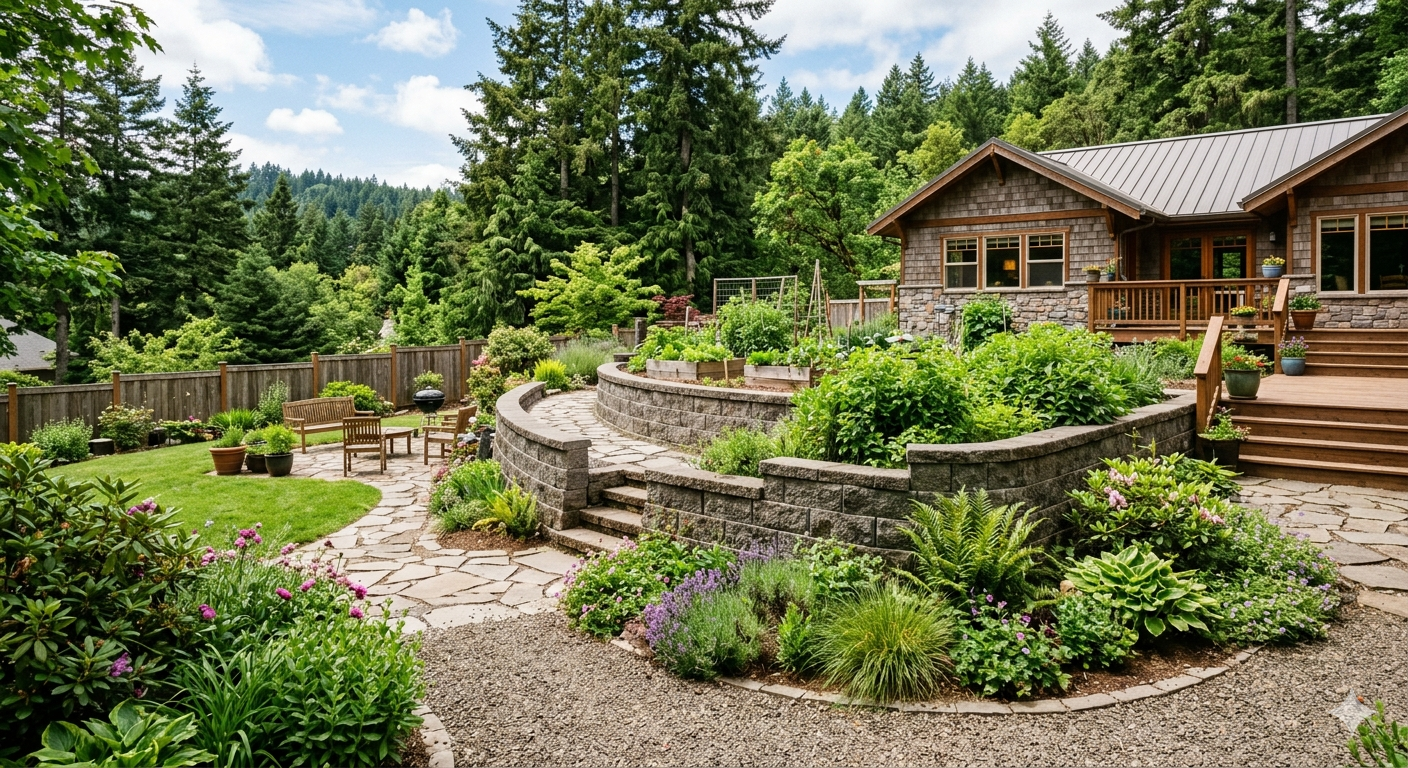
Holding Slopes in Place Before They Move
Retaining Walls in Mount Vernon for properties where soil shifts, slopes erode, or elevation changes threaten structures
Smucker Quality Homes builds retaining walls that control soil movement and manage grade transitions on residential and rural properties in Mount Vernon, Canyon City, Prairie City, and surrounding areas. You need a retaining wall when a slope is too steep to remain stable, when water runoff is cutting into the hillside, or when you want to create level outdoor space where the land naturally slopes. These structures are not decorative accents—they are engineered to resist lateral soil pressure and prevent erosion that can undermine foundations, driveways, and landscaping.
The wall is designed based on the height of the slope, the type of soil, and the drainage conditions on your property. Taller walls require deeper footings and may need additional reinforcement such as geogrid or tiebacks. Drainage is built into the wall to prevent water from building up behind it, which would increase pressure and cause the wall to shift or fail. Without proper drainage, even a well-built wall can bow or crack over time.
If you are dealing with a sloped yard that erodes after rain, a hillside that threatens a driveway, or a property line that needs stabilization, a retaining wall provides a permanent solution that addresses both structural need and site usability.
How the Wall Is Built and What It Does
Your site is excavated to reach stable soil, and a compacted gravel base is laid to support the wall. The first course is leveled and pinned or set in concrete to anchor the structure. Each row is stacked with proper setback to create a batter, which angles the wall slightly into the slope for added stability. Drainage pipe is placed behind the wall and backfilled with gravel to channel water away from the face and prevent hydrostatic pressure.
What you notice after the wall is finished is a stable, level area where the slope used to be. Water no longer cuts trenches through the yard after heavy rain. Soil stays in place. Smucker Quality Homes uses materials suited to the load and environment, whether that means modular block, poured concrete, or natural stone. The wall is built to last without ongoing repairs if the base is solid and drainage is functioning.
Retaining walls taller than four feet often require engineering review and may need permits depending on local codes. Walls built without proper compaction, drainage, or setback can fail within a few years. If the wall is near a property line or existing structure, placement and design must account for setbacks and load distribution. This work does not include landscaping, planting, or decorative caps unless specified in the project scope.
Common Questions About Stability and Longevity
Homeowners often need clarity on what makes a retaining wall hold up and what can cause it to fail prematurely.
What causes a retaining wall to lean or crack?
Inadequate drainage, poor compaction, or insufficient base depth are the most common causes. Water pressure builds behind the wall and pushes it forward. Proper drainage pipe and gravel backfill prevent this by allowing water to exit through weep holes or perforated pipe.
How deep does the footing need to be?
The footing depth depends on wall height and soil type. Taller walls and soft soils require deeper footings. A wall over three feet typically needs a footing that extends below the frost line to prevent heaving during freeze-thaw cycles.
Why use geogrid or tiebacks?
Geogrid is a mesh material that extends into the soil behind the wall and increases lateral support. Tiebacks anchor the wall to stable ground farther upslope. Both are used when wall height or soil conditions exceed the capacity of the wall material alone.
What material works best for a retaining wall?
Modular concrete blocks are cost-effective and easy to work with for walls up to four feet. Poured concrete offers greater strength for taller walls. Natural stone provides a traditional look but requires skilled installation and costs more per linear foot.
When should a retaining wall be replaced instead of repaired?
If the wall is leaning more than two inches, shows large cracks, or has failed drainage, replacement is usually more reliable than patching. In Mount Vernon, seasonal freezing and soil moisture can worsen existing damage quickly.
Smucker Quality Homes evaluates your slope, soil, and drainage before building a retaining wall. If you have a hillside that needs stabilization or want to add usable flat space to your property, contact the team to review the site and discuss footing depth, material options, and drainage requirements that fit your terrain in Mount Vernon and neighboring communities.